Upper West Ghana
No Girl Should Miss School Because of Her Period.
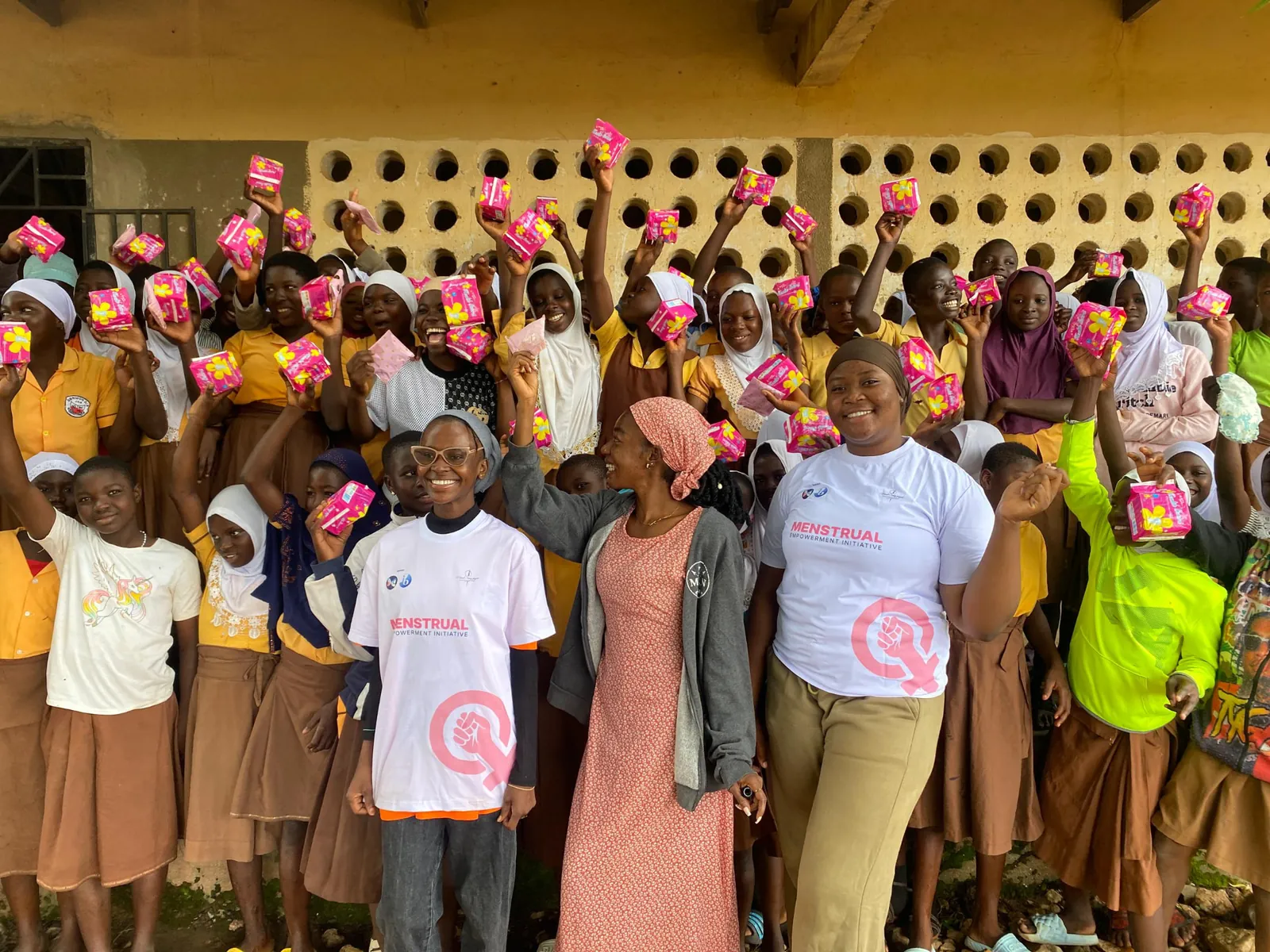
MEI produces affordable biodegradable menstrual pads from local waste materials — so every girl in Upper West Ghana can attend school with dignity, every day of every month.
- IB Festival of Hope — Global Youth Action Fund 2025 Winner
- Health Innovation Festival 2026 — 2nd Runner Up
- African Leadership University
- CAMFED Partner
- Demo Day Kigali 2026
The reality
The Problem We Are Solving
Period poverty quietly removes girls from classrooms across Upper West Ghana every single month.
Girls miss 4-5 school days every month due to lack of menstrual products.
Commercial pads cost GHS 8-15 per pack — unaffordable for most families.
Girls use unsafe rags and leaves causing infections and shame.
women globally lack menstrual products
girls in sub-Saharan Africa miss school monthly
Our model
Our Four Solutions
A community-based menstrual health supply model built with girls, not for them.
Biodegradable Pads
Affordable locally-produced pads at GHS 2.31 per pad — 80% cheaper than commercial alternatives.
Reusable Pad Training
Training girls as producers, building skills and self-sufficiency in their own communities.
Community Hubs
Production, education, and free distribution all happening in one trusted place.
Free Health App
Cycle tracking, health education, and private stigma-free Q and A.
Global goals
Our SDG Focus Areas
MEI's work contributes directly to seven United Nations Sustainable Development Goals.
- 1
Sustainable Development Goal 1: No Poverty
Local production and pad-making training create income streams for girls and women in Upper West Ghana.
- 3
Sustainable Development Goal 3: Good Health and Well-Being
Safe, hygienic biodegradable pads replace rags and leaves, reducing infections and reproductive health risks.
- 4
Sustainable Development Goal 4: Quality Education
Girls stay in class instead of missing 4-5 school days every month because of their period.
- 5
Sustainable Development Goal 5: Gender Equality
We break menstrual stigma and put girls in the lead as producers, educators and decision makers.
- 6
Sustainable Development Goal 6: Clean Water and Sanitation
Our workshops teach safe menstrual hygiene, washing and disposal practices in low-resource settings.
- 8
Sustainable Development Goal 8: Decent Work and Economic Growth
Community production hubs create dignified local jobs and grow a homegrown menstrual health supply chain.
- 12
Sustainable Development Goal 12: Responsible Consumption and Production
Pads made from local waste materials biodegrade in 3-6 months instead of lingering for 450 years.
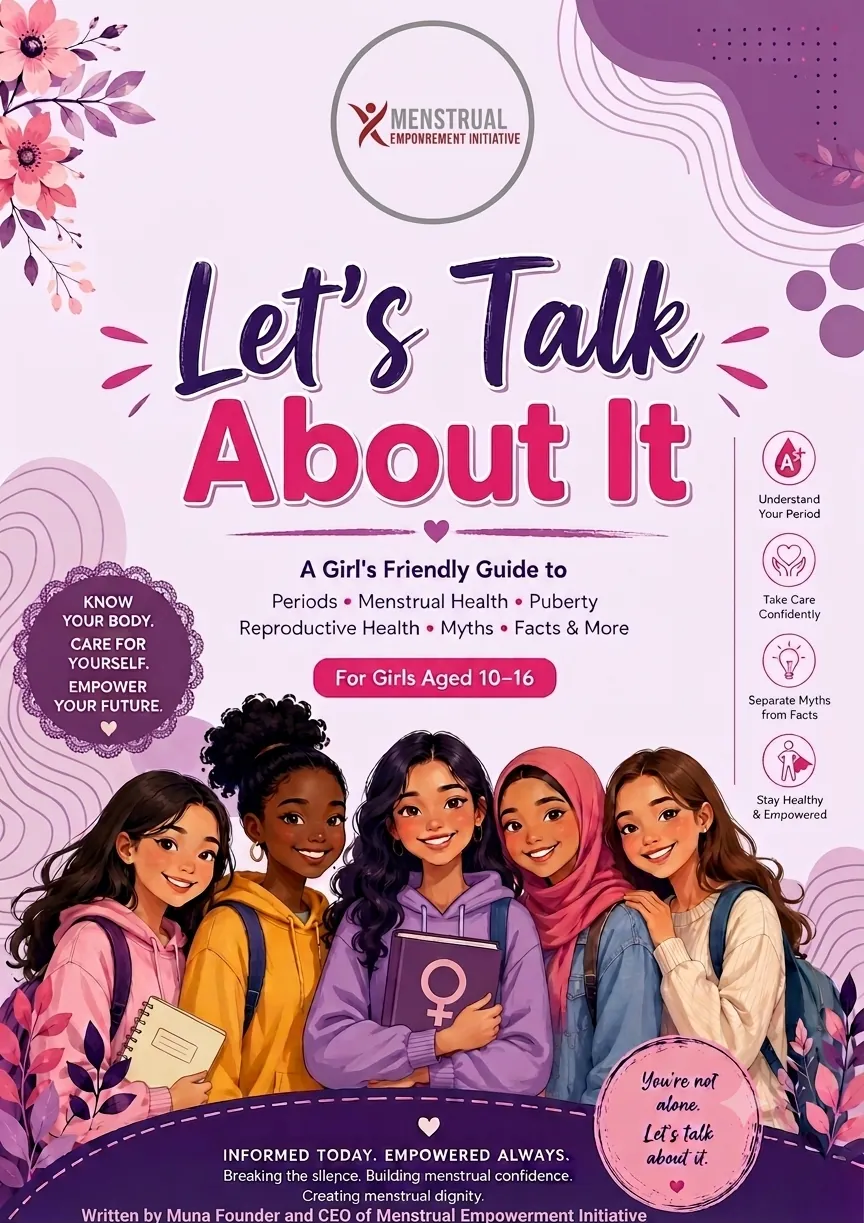
Let's Talk About It
A Girl's Friendly Guide to Periods, Menstrual Health, Puberty, Reproductive Health, Myths, Facts and More
For girls aged 10 to 16 globally. 16 chapters. 25 pages. Available in English with Dagaari words. Written by Muniratu Rasamuna Idrisu.
- Free to Download
- 16 Chapters
- Available Globally
Period poverty is not inevitable. It is solvable.
Partner, invest, or donate — and help us reach 3,000 girls in Year 1.